Visibility has become one of the biggest promises in modern operations. Companies want to know where their assets are, how materials move, what teams have received, what has shipped, and what happens across the warehouse, production floor, maintenance area, or supply chain.
That visibility matters. When teams cannot see operational activity in real time, they lose time, money, and control. Assets go missing, inventory loses accuracy, shipments leave with errors, equipment sits idle, and managers spend too much of their day trying to understand what actually happened.
But visibility alone does not run the operation.
A manager does not need more data just for the sake of having more data. A warehouse leader does not want another screen full of raw scans. Operations teams need more than dashboards that show movement without explaining performance. Compliance teams need reliable records, not thousands of disconnected events.
Visibility is the starting point, not the outcome
Tracking data creates the foundation for better operations. RFID reads, barcode scans, location updates, sensor events, and movement logs build a live picture of activity. They can show that a pallet entered a receiving zone, a returnable container left the dock, a tool moved from one department to another, or a finished good passed through a shipping portal.
However, managers do not manage individual reads and scans. They manage performance. To do that well, they need to know whether receiving runs behind schedule, whether put-away slows down the flow, whether teams confirmed a shipment before it left the dock, whether equipment sits idle, and whether the same issue keeps happening in the same location, shift, or workflow.
This is the difference between tracking data and operational reporting. Tracking can tell a team that an asset appeared at a specific time and place. Reporting can show that the same asset has stayed idle for 18 days, missed its inspection window, and may not be available for the next scheduled job.
One gives a data point. The other gives context. Managers rely on that context when they need to make fast, practical decisions.
The reports managers actually use
The most useful reports usually answer the questions teams already ask every day. They do not need to be overly complex. They need to be clear, reliable, and connected to real operational decisions.
In a warehouse, managers care about receiving accuracy, shipment validation, inventory movement, cycle counts, stock discrepancies, and pick accuracy. They need to understand what arrived, what went missing, what moved to storage, what can ship, and where errors appeared. Without reporting, these questions often require manual checks, spreadsheets, messages, and end-of-shift updates. With reporting, teams access the information faster and act on it with more confidence.
On the production floor, flow matters most. Supervisors need insight into WIP status, dwell time, bottlenecks, process delays, material availability, and job movement between stages. If a batch sits too long at one workstation, or a traveler disappears between steps, the issue needs to surface quickly. A good report gives supervisors a chance to act before a delay turns into downtime, missed output, or a customer escalation.
Maintenance teams use reporting to move from reactive work to planned action. Managers can see which assets need service, which tools require certification, which equipment gets used most often, and which items create recurring issues. Instead of waiting for equipment to fail or relying only on calendar-based schedules, teams can plan maintenance based on actual usage, movement history, and asset condition.
For compliance and audit teams, reporting creates evidence. It gives teams timestamped records, movement history, chain of custody, maintenance logs, and proof that workers completed required steps. In regulated environments, “we think it was done” is not enough. Teams need to show exactly what happened, when it happened, and what the process involved.
These reports are not nice-to-have extras. They help managers move from assumptions to confidence.
Operational insights reduce the daily chase
In many operations, managers spend too much time chasing updates. Someone checks whether an item arrived. Another person confirms whether a shipment has left. A supervisor searches through spreadsheets to see whether a tool came back. At the end of the shift, teams still try to understand what went wrong.
This way of working creates friction because the operation keeps moving while the information lags behind. By the time the issue becomes clear, the team may already face a delayed shipment, a missing asset, a production interruption, or an incomplete audit trail.
Operational reporting changes that rhythm. When the system captures events automatically and turns them into clear reports, teams no longer need to manually piece the story together. They can see what happened, where it happened, and what still needs attention.
This creates accountability without adding more work. Warehouse teams can see which shipments passed verification and which need review. Maintenance teams can see overdue equipment. Supervisors can spot jobs that have waited too long. Compliance managers can pull an audit trail without asking five people for supporting documents.
The value does not sit only in the report itself. It comes from giving everyone the same operational truth.
From raw visibility to real operational insight
The strongest reporting does more than summarize the past. It helps teams improve what happens next.
A shipment exception report can show where wrong shipments happen most often. A dwell-time report can reveal where materials get stuck. Utilization reports show which assets teams overuse, underuse, or cannot find. Maintenance reports expose equipment that quietly creates downtime. Audit reports can turn days of manual preparation into a faster and more reliable review.
This is where reporting becomes more than a platform feature. It becomes a window into the way the business actually operates.
With better reports, managers can ask better questions. Where do teams lose time? Which processes create the most exceptions? Which assets fail to support productivity? Which areas need more control? Why do some locations perform better than others? Where do small problems keep repeating?
Those questions move the conversation beyond simple tracking. They connect assets, materials, workflows, people, and systems into a broader operational intelligence strategy. The goal is not only to know where something is. The goal is to understand how the operation behaves and how teams can improve it.
A stronger story for real-world operations
This is also what makes the value of visibility easier to explain in real business terms. Most customers already understand the pain of missing assets, inaccurate inventory, delayed shipments, manual audits, and slow reconciliation. They live with these problems every day. What they need is a practical way to connect the solution to the outcomes they care about.
Reporting creates that connection. It turns a visibility project into a performance conversation.
Instead of focusing only on location tracking, the discussion becomes much more concrete. Can the team reduce search time? Can they catch shipment issues earlier? Can they prove compliance faster? Can they reduce manual reconciliation? Can they understand why materials get delayed? Can they make better decisions with the data they already capture?
That kind of story earns trust because it reflects the real pressure inside daily operations. It speaks to the manager who has to explain a missing asset, the supervisor who has to recover a delayed job, the warehouse team that has to fix a short shipment, the maintenance lead who has to prevent downtime, and the compliance team that has to prove the process.
Good reporting gives these teams more than visibility. It gives them confidence.
Operational intelligence starts with better reporting
Visibility remains the foundation. Without accurate, real-time data, reporting cannot work. But visibility should not be the final goal.
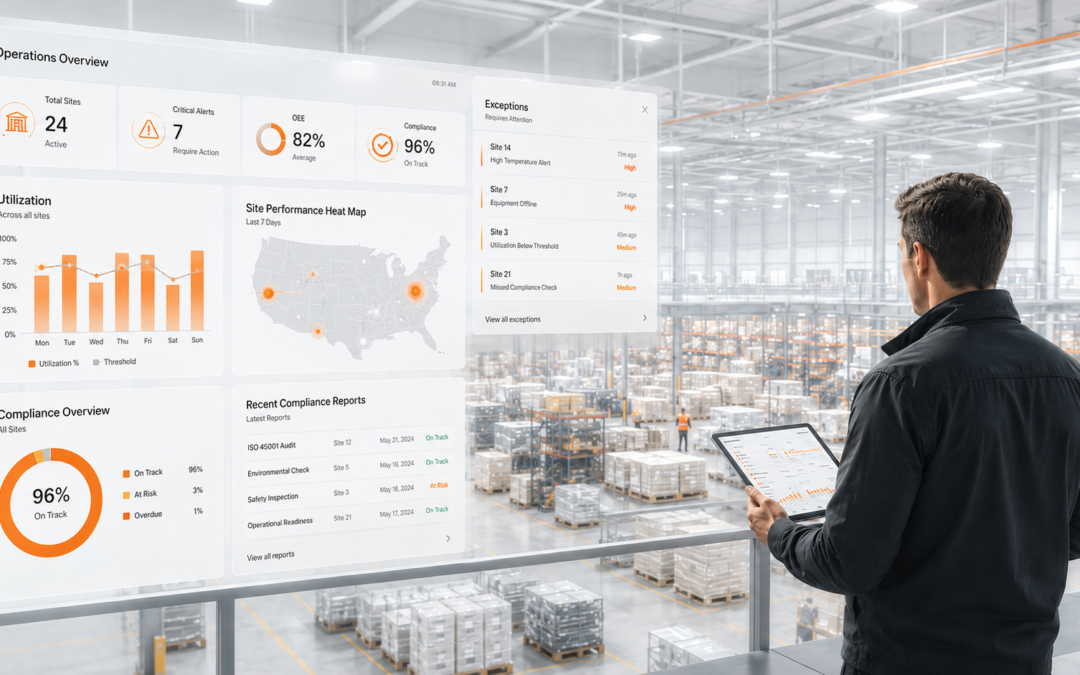
Managers need reporting that helps them monitor performance, spot issues sooner, improve accountability, and make better decisions across the entire operation. Strong reports show what moves, what slows down, what goes missing, what needs maintenance, what creates risk, and what deserves attention.
That is where InThing creates value beyond tracking. By turning asset, material, workforce, and process events into actionable reports, InThing gives teams insight into the operations behind the data. It helps managers move from simply seeing events to understanding patterns, exceptions, and opportunities for improvement.
This is the step from visibility to operational intelligence.
In real operations, that step matters. Knowing where something is can solve one problem. Knowing what that means for the business helps managers solve the right problems sooner.