When an emergency starts inside a manufacturing plant, warehouse, or distribution center, the first few minutes often determine how effectively the team can respond. A fire alarm may stop production immediately, but it does not tell the safety team whether everyone has left the affected area, whether someone is still working in an isolated room, or whether a contractor has moved into a part of the facility where they should not be. At that moment, supervisors need more than an attendance list or a floor plan. They need to understand what is happening across the facility as the situation develops.
This is where a Real-Time Location System, or RTLS, becomes part of the safety infrastructure. RTLS provides real-time information about movement and location, but the real value appears when companies connect that information with safety zones, access rules, dwell-time limits, alerts, and emergency workflows. Instead of simply showing where people are, the system can recognize when a situation requires attention and give the safety team the context they need to respond.
Seeing an evacuation as it happens
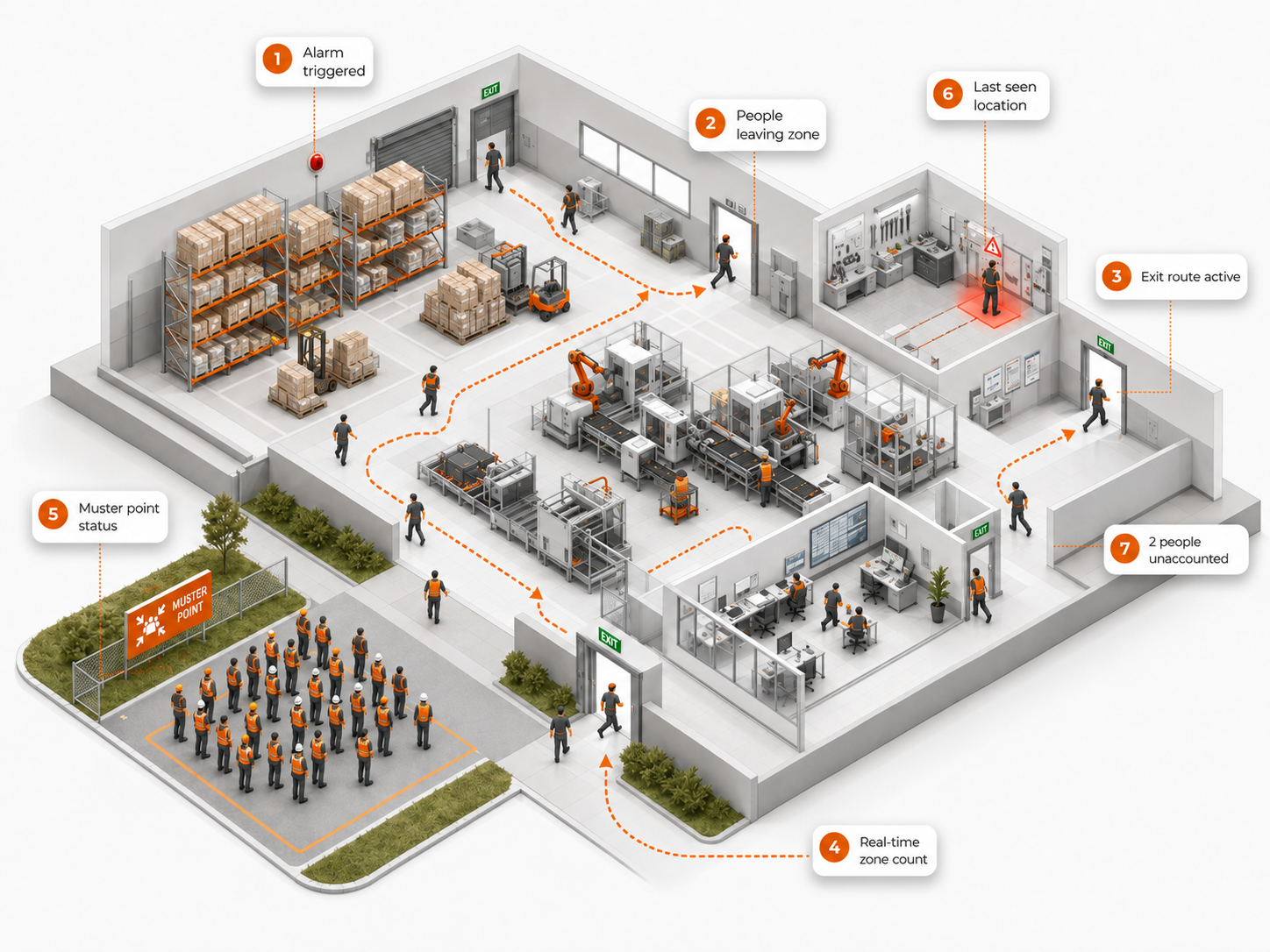
We recently demonstrated this approach through an emergency evacuation simulation. During the demo, the team could see the building’s floor plan and follow how people moved through different zones as the evacuation took place. At the same time, a reporting panel updated the number of people leaving each area, which created a live operational view of the entire evacuation.
This is important because evacuation becomes an information challenge almost immediately. People leave through different exits, contractors may not follow the same daily routines as employees, and some workers may have been in maintenance rooms, storage areas, or other isolated parts of the facility when the alarm started. A manual headcount at the muster point can confirm who has arrived, but it does not always explain where missing people may still be.
With real-time workforce intelligence, the safety team can compare the people who were present in a zone with those who have already exited or reached the designated muster point. If several people remain unaccounted for, responders can focus on the relevant areas rather than treating the entire facility as unknown. The system does not replace alarms, evacuation procedures, or emergency training. Instead, it gives those procedures better information and helps teams make faster decisions when time matters most.
Safety risks often begin during normal operations
An evacuation is easy to understand because the emergency is obvious. In everyday operations, however, many safety risks develop gradually and may not attract attention until something goes wrong. An employee may enter a restricted area for only a few minutes, a contractor may move beyond the part of the facility assigned to them, or a technician may remain alone in a remote maintenance zone much longer than expected.
These situations are different, but they share the same problem: the safety team needs to recognize an exception before it develops into an incident.
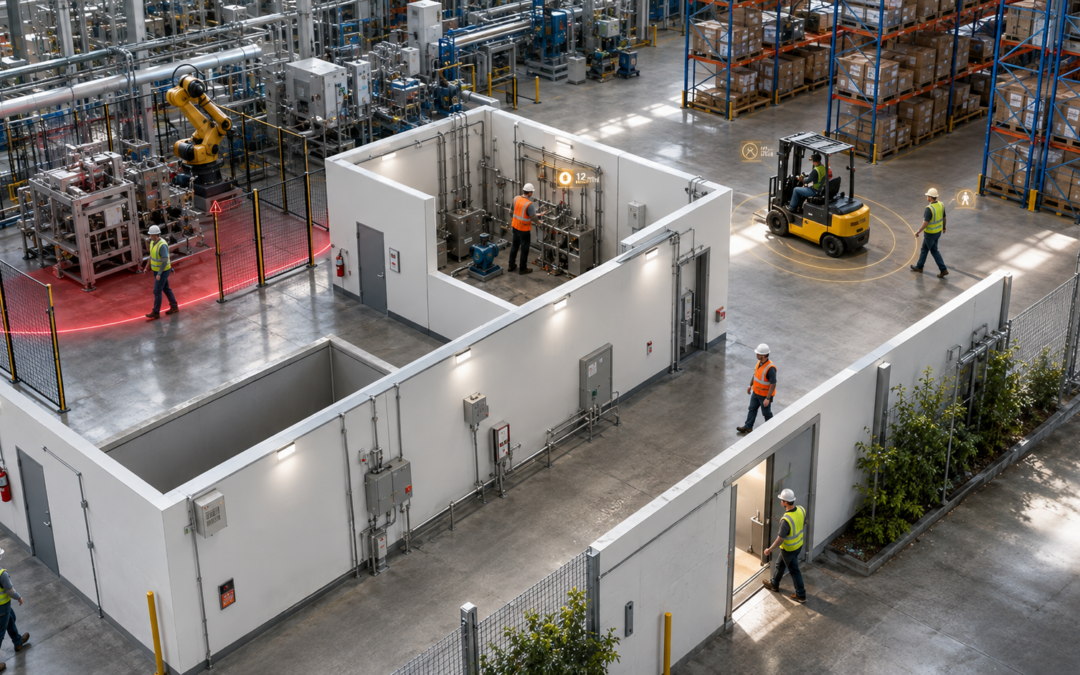
A facility can define red zones around automated machinery, loading areas, hazardous equipment, high-voltage infrastructure, or any other location where access requires additional control. The system can then apply different rules depending on the person, role, or situation. A maintenance technician may have permission to enter a machine area during scheduled work, while another employee or contractor may not.
When someone enters a zone without the appropriate authorization, the system can identify the violation and trigger the appropriate response. In practice, this gives the safety team more useful information than a simple location marker. The important question is not where a person is standing, but whether that person should be in that location under those conditions.
Supporting lone workers without constant supervision
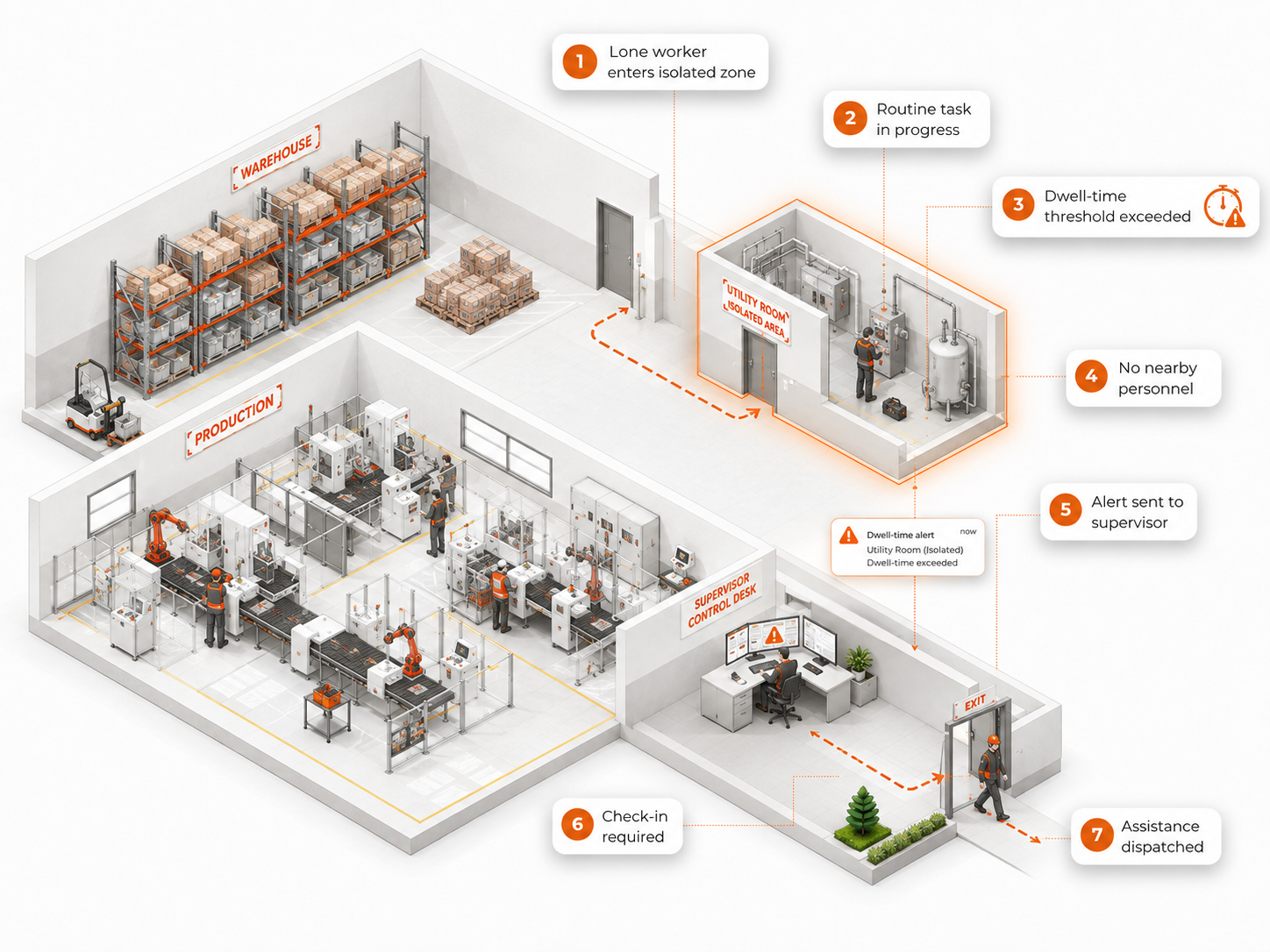
Lone workers create a different type of safety concern because nothing unusual may happen when they first enter an isolated area. A technician may need to inspect equipment in a remote utility room, perform maintenance away from the main production floor, or work in a part of the warehouse where few other people pass during the shift.
The risk increases when the person remains there longer than expected.
Instead of asking a supervisor to monitor that worker continuously, the organization can define an expected dwell time for the area. If the person remains in the zone beyond that threshold, the system can flag the situation and notify the appropriate team. A supervisor can then check whether the task simply took longer than planned or whether the worker may need assistance.
This creates a much more practical form of safety monitoring because it focuses on exceptions rather than constant observation. The system does not require someone to watch every movement. It brings attention to the situations that fall outside normal operating conditions.
Understanding risks around forklifts and pedestrians
Shared industrial spaces also create challenges when workers and vehicles move through the same environment. Facilities use marked pedestrian routes, safety procedures, barriers, and training to reduce the risk of collisions, yet production floors still contain intersections, loading areas, blind corners, and temporary work zones where a forklift and a pedestrian can approach the same point unexpectedly.
RTLS can add another layer of situational awareness by identifying when a worker and a vehicle move toward a predefined danger point at the same time. Depending on the configured workflow, the system can trigger an alert, notify the safety team, or record the event for later analysis.
The historical information can become just as valuable as the immediate alert. If the same location repeatedly produces proximity events, the facility may have a broader operational problem. The layout may create poor visibility, pedestrian routes may cross forklift traffic too often, or existing controls may not match the way people actually move through the space. By reviewing these patterns, safety teams can improve the environment instead of treating every event as an isolated case.
From location visibility to safety intelligence
Workforce intelligence becomes useful when it helps teams recognize and respond to conditions that matter. Emergency evacuation, occupancy monitoring, red-zone violations, mustering, movement violations, and worker travel distance can all use the same real-time location foundation.
The value does not come from watching employees move around a facility throughout the day. It comes from understanding when normal conditions change and when that change may create a safety risk. A person enters a prohibited area, a contractor crosses an authorized boundary, a lone worker stays isolated longer than expected, or several people fail to reach the muster point during an evacuation. In each case, the system gives the safety team information they can act on.
That is also consistent with InThing’s broader approach to worker safety and operational awareness: real-time visibility should help teams understand what is happening across the operation and respond before a situation becomes harder to control.
For employers, that is the real purpose of RTLS in workplace safety. The goal is not to know where every employee stands at every moment. The goal is to make sure that, when something unusual happens, the people responsible for safety can quickly understand the situation, identify who may be affected, and decide what to do next.