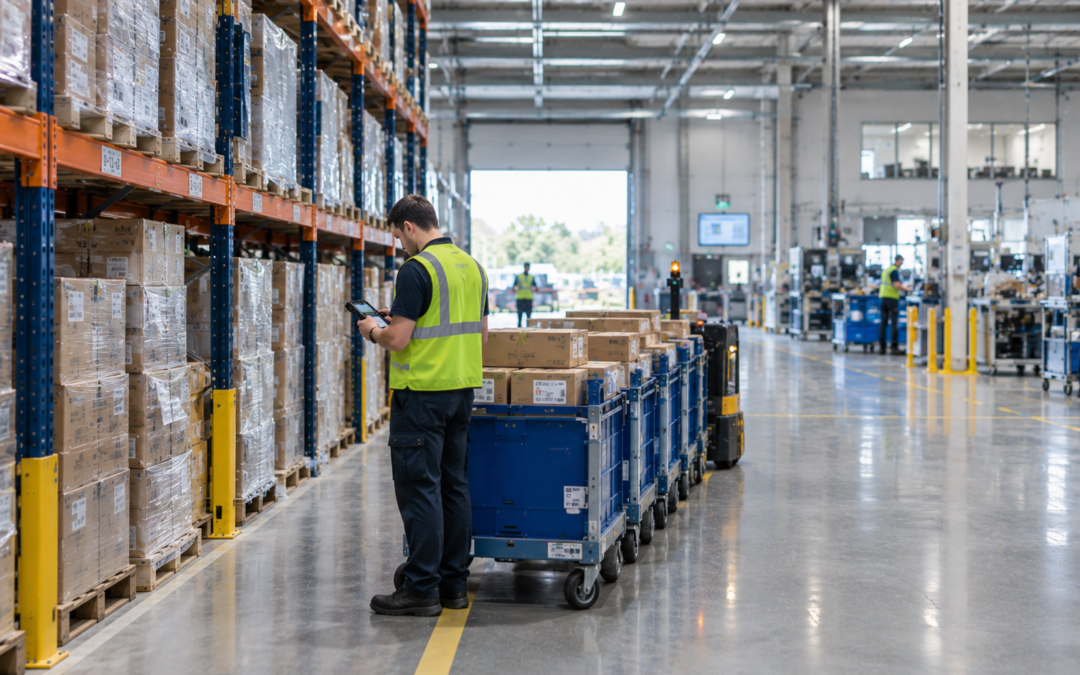
It’s 10:40 on a Tuesday. A line supervisor calls the warehouse: the next batch needs a component, and it isn’t at the station. The warehouse checks the system. The system says you have 400 units. Someone grabs a scanner and starts walking.
Twenty minutes later, they find the parts on a pallet near the receiving dock, still waiting for put-away since yesterday afternoon. The inventory count was right the whole time. The line stopped anyway.
If this sounds familiar, you’re not alone. Most operations don’t have an inventory problem. They have a movement problem.
Inventory tracking answers “what.” Operations need “where” and “when.”
Inventory tracking does an important job. It tells you what you own and how much of it you have. Your ERP or WMS holds that number, and cycle counts keep it honest.
But a count is a snapshot. It won’t tell you that a lot has sat in a staging lane for six hours, that a replenishment run left late, or that a shipment is still on the dock while the truck waits. Materials only create value when they reach the right place at the right time, and a static number can’t show you that.
Material Intelligence closes that gap. It connects every material event (received, moved, staged, consumed, shipped) into one live picture. Instead of asking “Do we have it?”, your team can ask “Where is it, how long has it been there, and will it arrive in time?”
Basic tracking tells you what exists. Material Intelligence tells you what is happening.
Follow one pallet through your operation
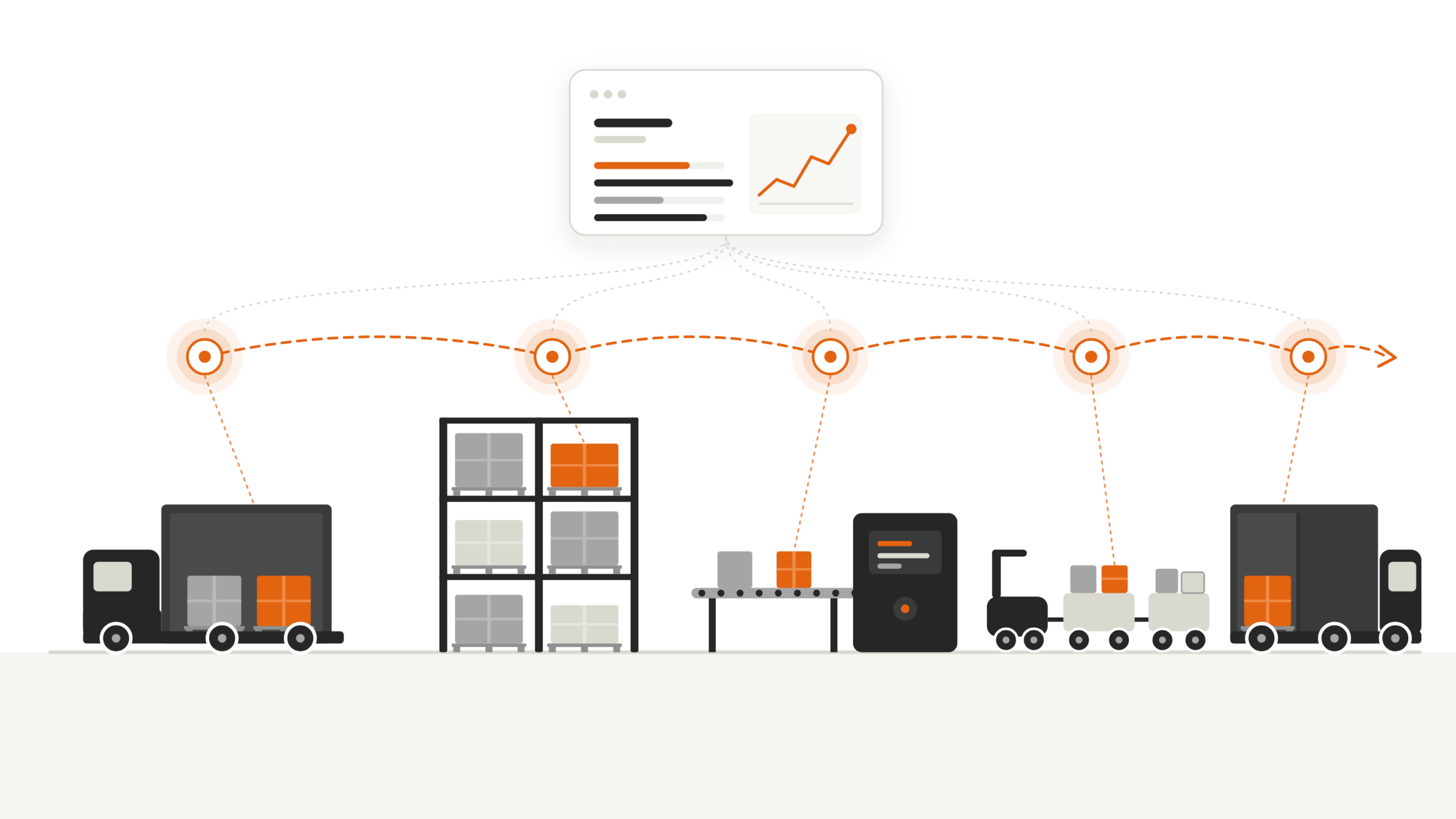
To see the difference, follow a single pallet from dock to customer.
Receiving. The pallet arrives. With basic tracking, someone scans it and the stock level goes up. With Material Intelligence, the system also records when it arrived, which purchase order it closes, and which lot it belongs to. If it sits unprocessed too long, the right person hears about it.
Storage and staging. The pallet moves to a location. Now you know where it is, not just that it exists, and you can spot material that has stopped moving.
Work in progress. Components leave the shelf and head to the line. You see what the line has consumed, what’s waiting between stations, and where WIP is piling up before it turns into a bottleneck.
Replenishment and milk-runs. Instead of fixed routes and guesswork, replenishment follows actual consumption. Operators refill line-side bins before they run empty, not after someone notices.
Shipping. Finished goods leave with a complete record behind them. When a customer asks about an order, or a supplier flags a bad lot, your team traces every step from a clear history instead of digging through spreadsheets.
At every stage, the pallet generates data. Material Intelligence turns that data into timing, context, and action.
Where technology fits
Each of these steps needs a way to capture what happened. Many teams start with a barcode scan on the handhelds they already own. Others add RFID at dock doors to read pallets without line of sight, BLE or RTLS to follow high-value materials across the floor, or sensors and PLCs to register events automatically. The right mix depends on your process, your volumes, and your environment, and no single technology fits every operation. What really matters is what happens after the read: whether that event updates your ERP, triggers a replenishment, or warns a supervisor before the line stops. So start with the capture method that fits today, and scale as your needs grow.
What Material Intelligence changes day to day
When teams can see materials in motion, the benefits show up in very practical ways:
- Fewer line stoppages. Replenishment follows real consumption, so parts arrive before stations run dry.
- Less time spent searching. People stop walking the floor to find material the system says you have.
- Faster traceability. Your team answers lot and recall questions with a clear history instead of a manual hunt.
- Leaner safety stock. When you trust the timing, you need fewer “just in case” buffers.
- Smoother shipments. Outbound teams know what’s ready, what’s staged, and what’s still missing.
- Better decisions upstream. Planners see where flow slows down, so they can fix the process, not just the symptom.
Start with the flow you already have
You don’t need to rebuild your operation to get there. Most teams begin with one pain point, such as a congested receiving dock, a line that keeps waiting for parts, or a new traceability requirement, and expand from there.
That’s the idea behind InFlow, InThing’s Material Intelligence solution. InFlow connects receiving, inventory, WIP, replenishment, milk-runs, shipments, and lot traceability in one view. It works with the capture technology that fits your process and integrates with the ERP, WMS, or MES you already run.
Materials in motion — traced, timed. Want to see what that looks like on your floor? Talk to our team.